Concrete of the same nominal type can have different stiffnesses, and bearings of the same model can vary in performance. The earthquakes a building may encounter vary even more. Designers need to know which of these factors most readily changes the behaviour of an isolated building.
From one fixed number to a range of possibilities
A base-isolated building places deformable bearings between its foundation and superstructure, concentrating much of the horizontal motion in the isolation layer. Using a reinforced-concrete frame model, the study examines both relative deformation between storeys and bearing displacement. The former relates to superstructure damage; the latter determines how much movement space the isolation layer needs.
The paper varies material, structural and isolator parameters within their respective ranges and measures the resulting response changes. This ranks their influence and identifies priorities for quality control and detailed modelling.
Sensitivity is rather like adjusting radio controls: a small turn of one knob may change the sound dramatically, while an equal turn of another does little. The analysis holds other conditions fixed, changes one parameter, and observes changes in the response mean and dispersion. The mean describes the typical response level; the standard deviation describes how widely results are spread. Together they distinguish parameters that mainly shift response magnitude from those that mainly increase uncertainty.
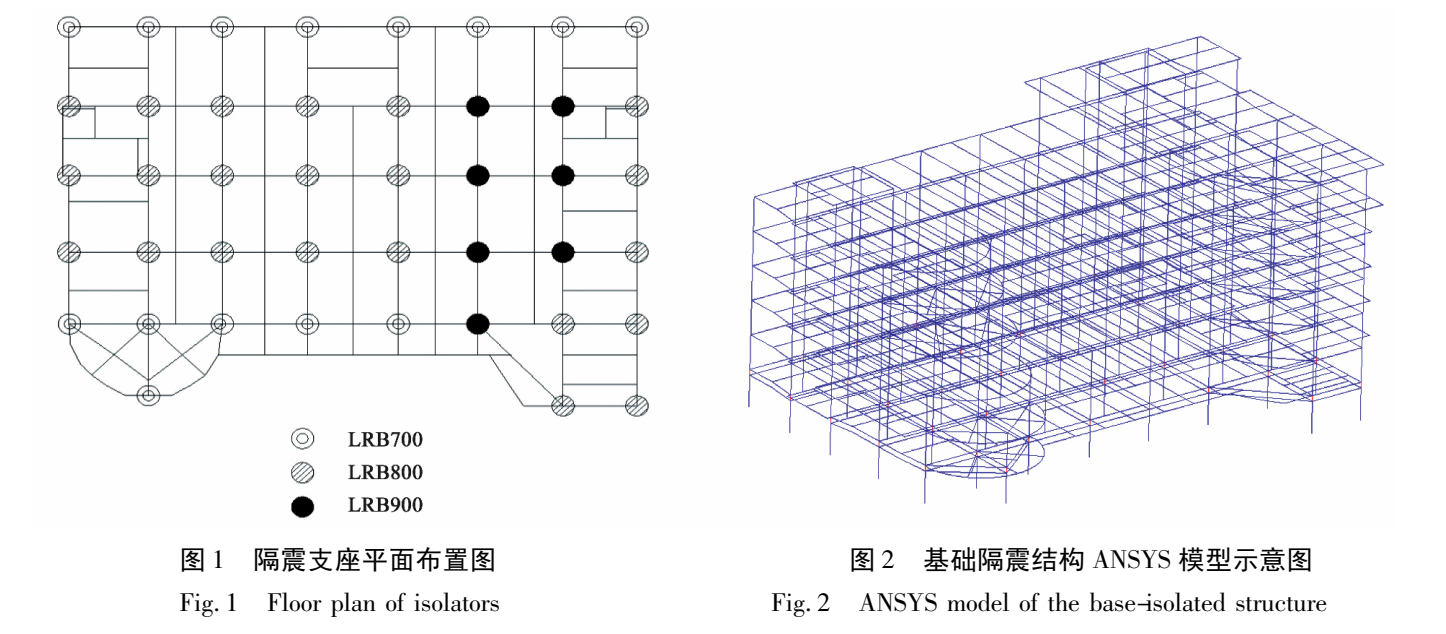
Isolation changes both the building and its sensitive parameters
The tornado diagrams resemble horizontal bar charts. A longer bar indicates that variation in the corresponding parameter more strongly affects the response being examined. Comparing the original and isolated structures shows that their sensitivity rankings change.
The study identifies concrete elastic modulus, structural weight, bearing yield force and post-yield stiffness as parameters deserving particular attention. Post-yield stiffness can be understood as the additional force needed to keep pushing a bearing after it enters a large-deformation stage. Once the isolation layer accommodates more deformation, its device parameters naturally exert greater control over building motion.
There is a structural reason for this shift. In the original structure, beams and columns resist larger seismic actions; when materials become nonlinear, strength parameters more strongly influence deformation. With isolation, superstructure response decreases and bearings accommodate most horizontal movement, increasing the importance of bearing properties. Although the objective is still to control interstorey deformation, the mechanical process has changed. Sensitivity rankings therefore vary with earthquake intensity and whether isolation is present.
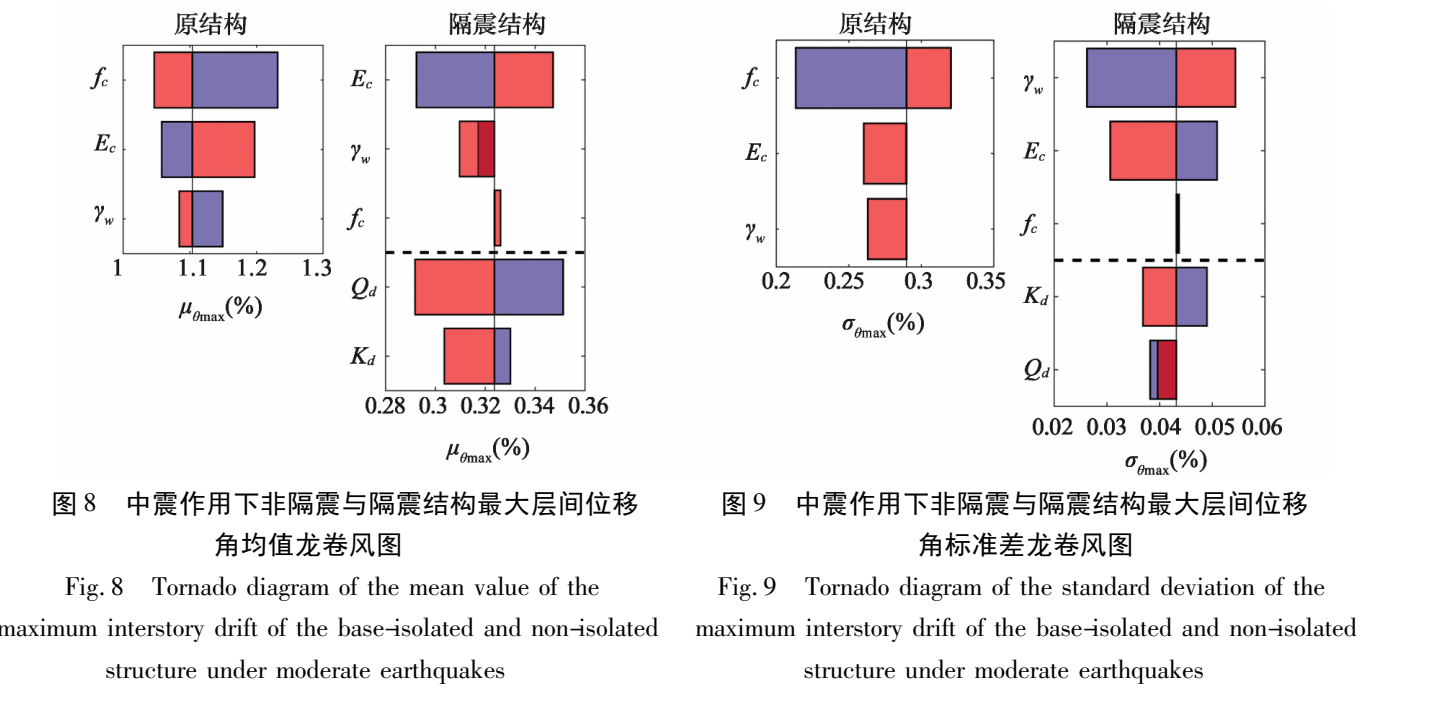
Uncertainties can also be ranked
The paper further examines response dispersion from different ground motions and finds their uncertainty more influential than uncertainty in the structural parameters considered. Even with an unchanged building model, switching earthquake records can appreciably change the results.
Isolation design therefore requires two parallel tasks: selecting representative seismic inputs and establishing variation ranges for key material and bearing properties. Identifying the most influential factors makes better use of limited testing, computation and quality-control resources.
The dual response surfaces used in the study describe both average response and variability, making comparisons across many parameter combinations more efficient. In design, this helps identify variables needing more reliable test data and manufacturing or construction deviations requiring tighter control, before testing the scheme with representative earthquake records. Results can then describe typical building behaviour and the range around it, providing a foundation for subsequent probabilistic assessment.